
You Don't Have a Productivity Problem. You Have a Clarity Problem
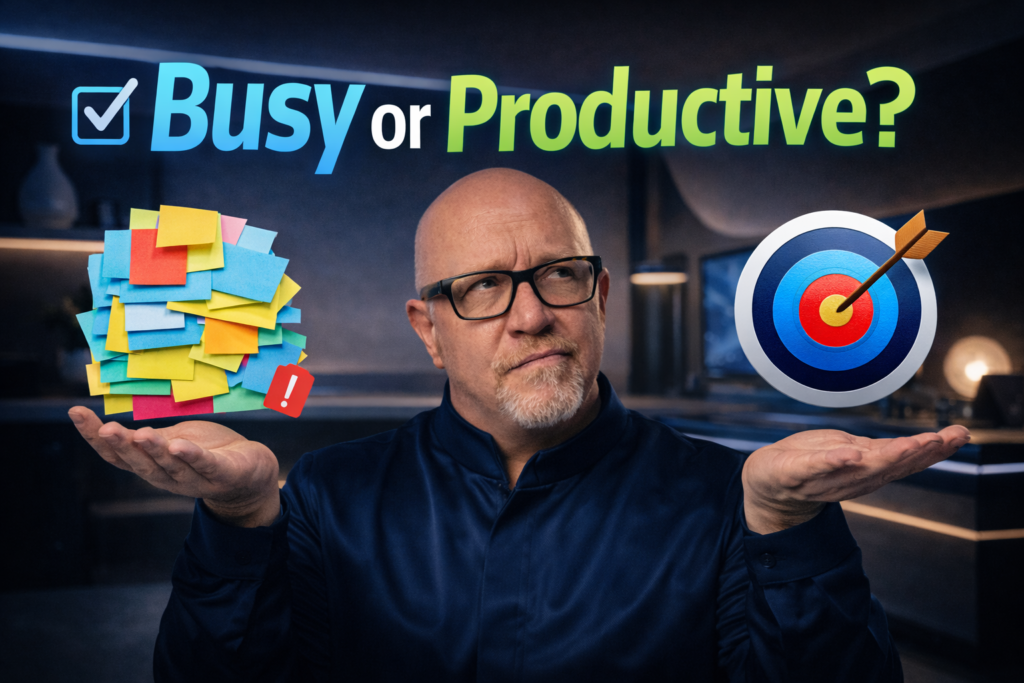
I need to tell you something about my brother.
He died last year. Suddenly. Unexpectedly.
And in the weeks after, I found myself looking at my calendar. The meetings I’d prioritized, the emails I’d stayed up late answering, the projects I’d pushed myself to finish. None of it made sense anymore.
The client call I’d stressed over for three days? Forgotten.
The presentation I’d spent twelve hours perfecting? Already replaced by someone else’s priorities.
The email threads I’d obsessed about closing? Still sitting there, somehow less urgent than they’d felt two weeks earlier.
What actually mattered, what I couldn’t stop thinking about, was the time I didn’t spend with him.
The conversations we didn’t have because I was “too busy.”
The visits I postponed because “work was crazy right now.”
The moments I traded for tasks that, it turns out, didn’t need me at all.
That’s when it hit me: I didn’t have a productivity problem.
I had a clarity problem.
And I’d been confusing the two for years.
The Productivity Trap Nobody Talks About
Here’s the thing about productivity: it’s seductive.
You can measure it. Track it. Optimize it. Gamify it.
How many emails did you send today? Thirty-five. Nice.
How many meetings did you attend? Six. Solid.
How many tasks did you check off? Fourteen. You crushed it.
The dopamine hits keep coming. The checkboxes get ticked. The calendar fills up.
And you think: I’m being productive. Look at all this activity.
Except activity isn’t the same as progress.
You can send fifty emails and accomplish nothing.
You can attend eight meetings and make zero decisions.
You can check off twenty tasks and still not move the needle on anything that actually matters.
Because here’s what nobody tells you when they’re selling you the latest productivity system:
You can be wildly productive and completely unclear about what you’re building.
And unclear productivity is just expensive busywork with better tools.
It’s like being really good at climbing a ladder. Impressive. Efficient. Fast.
Except the ladder’s leaning against the wrong building.
Productivity vs. Clarity: What’s the Actual Difference?
Let me break this down because the difference matters more than most people realize.
Productivity asks: How do I do this faster?
Clarity asks: Should I be doing this at all?
Productivity is about execution. Clarity is about direction.
Productivity optimizes for speed. Clarity optimizes for meaning.
Productivity measures how much you did. Clarity measures whether it mattered.
Both are important. But clarity comes first.
Because if you’re unclear about what matters, being productive just means you’re efficiently doing the wrong things.
And I see this constantly. Smart, capable people optimizing their workflows, upgrading their tools, perfecting their systems… while working on things that don’t actually need them.
They’re productive. They’re just not clear.
And the lack of clarity costs them more than any inefficiency ever could.
The Three Questions That Surface Clarity
So how do you get clear?
I use three questions with every client I work with. And they’re deceptively simple.
Question 1: What Actually Moved Forward This Week?
Not what you did. Not how busy you were.
What actually progressed?
Most people can’t answer this clearly. They’ll give me activity:
“I had a lot of meetings.”
“I answered tons of emails.”
“I worked on several projects.”
That’s not progress. That’s motion.
Progress is specific:
“We signed two new clients.”
“We launched the feature we’ve been building for three months.”
“We made the hire we’ve been trying to make since September.”
If you can’t name what moved forward (clearly, specifically, concretely), you were busy.
But you weren’t productive in the ways that actually matter.
Question 2: What’s Taking Time But Not Creating Value?
This is where the time leaks live.
Every business has them. Every person has them.
Tasks that feel necessary but don’t actually move anything forward.
Examples:
- Meetings that could have been emails (or Slack messages, or skipped entirely)
- Emails that didn’t need responses in the first place
- Reports nobody reads
- Approvals that don’t actually need your sign-off
- Processes that exist because “we’ve always done it this way”
Most of this stuff is invisible until you ask the question directly:
What am I doing that doesn’t actually need me?
That question is uncomfortable. Because the answer is usually “more than I’d like to admit.”
But you can’t fix what you won’t see.
Question 3: If You Could Only Work on Three Things Next Week, What Would They Be?
This is the constraint question. And it’s brutal.
Because it forces you to choose.
Not ten priorities. Not seven. Not even five.
Three.
If you had to cut everything else (all the “nice to haves,” all the “when I get to it,” all the “probably should”), what would you keep?
That’s where clarity lives.
Most people can’t answer this without hedging:
“Well, I really need to do all of these…”
No. Choose three.
Because here’s the truth: you’re already choosing. Every day. Every hour.
You’re just not doing it consciously.
Your calendar is choosing for you.
Your inbox is choosing for you.
Other people’s urgency is choosing for you.
Clarity is taking that choice back.
Time Leaks vs. Time Theft (And Why Theft Is Worse)
Let me introduce two concepts that changed how I think about time: time leaks and time theft.
They sound similar. They’re not.
Time leaks are inefficiencies.
Friction. Repetitive tasks. Poor workflows. Tool sprawl. The stuff that slows you down but doesn’t fundamentally misalign you.
Examples:
- Copying and pasting data between tools
- Searching for files you can’t find
- Waiting on approvals that could be automated
- Doing the same task manually every week when it could be a template or a system
Time leaks are annoying. But they’re fixable.
You can automate them. Systematize them. Delegate them. Optimize them away.
Time theft is different.
Time theft is spending hours (sometimes days) on things that don’t actually matter.
Working on the wrong priorities.
Saying yes to things you should decline.
Doing work that doesn’t need you because nobody else has been empowered to do it.
Attending meetings because you’re worried about “missing something” (spoiler: you’re not).
Time theft isn’t about efficiency. It’s about misalignment.
And you can’t automate your way out of misalignment.
You have to get clear.
Here’s the problem: most people focus on time leaks because they’re easier to see.
“If I could just automate this one thing…”
“If I could just find a better tool…”
“If I could just get more organized…”
But time leaks aren’t your biggest problem.
Time theft is.
Because you can optimize all the workflows you want. You can buy all the tools. You can automate everything.
But if you’re optimizing the wrong work, you’re still losing.
You’re just losing efficiently.
What Clarity Actually Looks Like
Let me paint you a picture of what clarity looks like in practice.
Because it’s not abstract. It’s specific.
Clarity is knowing your top three priorities every Monday morning.
Not guessing. Not reacting to whatever landed in your inbox over the weekend. Knowing.
Clarity is being able to say no to good opportunities because they don’t align with what matters right now.
Not because they’re bad. Because they’re not the right thing.
Clarity is looking at your calendar and seeing intention, not just obligations.
Meetings you chose. Blocks you protected. Space you created.
Clarity is ending the week and being able to name what actually moved forward.
Not what you did. What progressed.
Clarity is not feeling guilty about what you didn’t do, because you’re confident about what you did.
That’s clarity.
And here’s what most people miss: clarity doesn’t come from working harder.
It comes from thinking harder.
About what matters.
About what doesn’t.
About where you’re going and why.
And most of us don’t create space for that thinking.
We’re too busy being productive.
How to Reclaim Clarity (Starting This Week)
So how do you actually do this?
Here are three practical steps you can take starting this week.
Step 1: Run a Weekly Priority Audit
Every Sunday or Monday morning (before you look at your calendar, before you open your inbox), answer this question:
What are my top three priorities this week?
Write them down. Be specific.
Not “work on the project.” That’s vague.
Try: “Finish the client proposal and send it by Wednesday.”
Or: “Hire a VA and delegate email triage.”
Or: “Ship the new feature to beta users and collect feedback.”
Three things. Clear. Specific. Concrete.
Step 2: Do a Daily Reflection
At the end of each day, ask yourself:
Did I work on one of my top three priorities today?
If yes, good. Keep going.
If no, why not? What got in the way?
This isn’t about guilt. It’s about pattern recognition.
If you’re consistently not working on your stated priorities, your priorities aren’t the problem.
Your boundaries are.
Step 3: Run a Time Theft Audit
Once a week, look at your calendar and ask:
What did I spend time on that didn’t actually need me?
Write it down.
Then ask: How do I delegate this, delete this, or decline it next time?
This is how you reclaim hours.
Not by working faster. By working on the right things.
The Uncomfortable Truth About Clarity
Here’s what nobody wants to hear:
Getting clear means saying no to good things.
It means disappointing people who expect you to say yes.
It means letting go of work that you’re good at but that doesn’t actually move the needle.
It means admitting that a lot of what you’ve been doing doesn’t matter as much as you thought it did.
That’s uncomfortable.
Because we’ve been taught to equate busy with valuable. Full calendars with importance. Activity with impact.
But busy isn’t valuable.
Impact is valuable.
And impact requires clarity.
Clarity about what matters.
Clarity about what doesn’t.
Clarity about where you’re going and why.
You can’t automate clarity.
You can’t delegate clarity.
You can’t buy clarity from a tool or a course or a framework.
You have to create it.
And creating it requires space. Time. Reflection.
Which is exactly what most of us don’t have.
Because we’re too busy being productive.
What’s Next
If you want to see where you are right now (how clear your priorities actually are, where your time leaks and time theft live, what’s realistic given your current cognitive capacity), I built a diagnostic for that.
It’s called Chronos. It’s free. Takes about eight minutes.
It measures six dimensions:
- Where your attention actually goes
- Where you’re the bottleneck
- How mature your processes are
- How ready you are for AI implementation
- Where you could delegate or delete
- How much cognitive capacity you actually have
You’ll get a personalized report showing your biggest clarity gaps and what to fix first.
No generic advice. No fluff. Just clarity about where you are and what to do next.
And if you want to see this framework in action (watch me walk through the three clarity questions with real examples), I’ve recorded a full video breaking it all down.
Watch: You Don’t Have a Productivity Problem. You Have a Clarity Problem →
Because here’s the truth most productivity gurus won’t tell you:
You don’t need another system.
You don’t need another tool.
You don’t need to optimize your morning routine or batch your emails or try the Pomodoro technique.
You need clarity.
Clarity about what matters.
Clarity about what you’re building.
Clarity about where your time should actually go.
Fix the clarity.
The productivity will follow.